Is a Tsavo East day safari worth it?
Yes, if you want to see big game once during a beach holiday and you accept a genuinely long day: a pre-dawn hotel pickup in the dark, and a return well after sunset. No, if you are prone to motion sickness on rough tracks, if you travel with toddlers, or if you expect the wildlife density of a multi-day Masai Mara safari.
Tsavo East is Kenya's largest single national park, managed by the Kenya Wildlife Service. A one-day visit from the coast realistically covers only the southern Voi–Aruba sector — a small share of the whole park. Sightings there are frequent, but they are never guaranteed: no operator can promise you an elephant, and none should try.
Three factors decide whether the format works for you, and this guide takes each in turn:
- Drive time — most of your day is spent in a vehicle, not in the park.
- Park fees — the KWS conservation fee is paid separately from the tour price.
- Game-drive hours — how much of the day you actually spend looking at wildlife.
If animals are the main reason you came to Kenya rather than a one-off add-on, read the day trip versus overnight comparison before booking anything.
How far is Tsavo East from Diani Beach and how long is the drive?
Expect several hours on the road each way. Diani to Bachuma Gate — the standard coastal entrance, sitting on the Mombasa–Nairobi highway — is a long transfer that varies mainly with Mombasa traffic and with the route the operator chooses.
Two route details matter in practice:
- The Dongo Kundu bypass links the south coast to the Mombasa–Nairobi corridor without crossing at Likoni. Where operators use it, it removes the historic ferry queue, which used to be the single least predictable part of the journey. Corridor and bypass information comes from the Kenya National Highways Authority.
- Sala Gate is not your gate. Sala is the eastern, Malindi-side entrance to Tsavo East. From Diani you enter at Bachuma or Voi. The full gate list is published by KWS.
The practical consequence is simple arithmetic, and it is the honest heart of this article: on a day trip, the hours in the vehicle getting there and back outnumber the hours spent game-driving inside the park. That is not a flaw in any particular tour — it is the geography of doing Tsavo East from the coast.
What does a typical one-day Tsavo East itinerary look like?
The day follows a predictable shape, though every operator words it slightly differently.
- Pre-dawn pickup from your Diani hotel, in the dark.
- Road transfer along the coast and inland, usually with a breakfast or comfort stop.
- Gate formalities and payment of the KWS park entry fee. Park gates operate 6:00–18:00.
- Morning game drive towards the Voi River and the Aruba area.
- Lunch at a lodge or a designated picnic site.
- A shorter afternoon game drive before exiting the park.
- Return transfer, arriving back at the coast after sunset.
The morning drive is the productive one. Animals move and feed in the cooler hours, the light is far better for photography, and dust hangs less in the air. By early afternoon the heat pushes wildlife into shade and under bush, and sightings thin out — which is why the afternoon leg is usually the shorter of the two.
One thing changes your day more than the route does: the vehicle. A minibus with a pop-up roof is comfortable on tarmac and cramped for photography; an open-sided 4x4 Land Cruiser is dustier, hotter and considerably better for seeing and shooting. Check which one you are getting before you book, not on the morning of the trip.
What animals can you realistically expect to see in one day?
Honestly, and tier by tier:
- Commonly encountered in the southern sector: elephant, buffalo, giraffe, zebra, impala, waterbuck, warthog, dik-dik and baboon.
- Possible but not routine: lion.
- Uncommon, and never promised: leopard, cheetah and black rhino.
No sighting is guaranteed on any safari, and Tsavo makes that truer than most. The park is vast and much of it is thick commiphora bush rather than open grassland, so animals are simply harder to spot than in the short-grass plains parks people know from documentaries. Lower density is not bad luck — it is the habitat.
For population data, use the published national wildlife census work carried out by the Wildlife Research and Training Institute with KWS, rather than operator anecdote or blog claims. The African savanna elephant, the animal most visitors come to Tsavo for, is assessed as Endangered on the IUCN Red List — worth knowing while you are watching one.
Why are the elephants in Tsavo red?
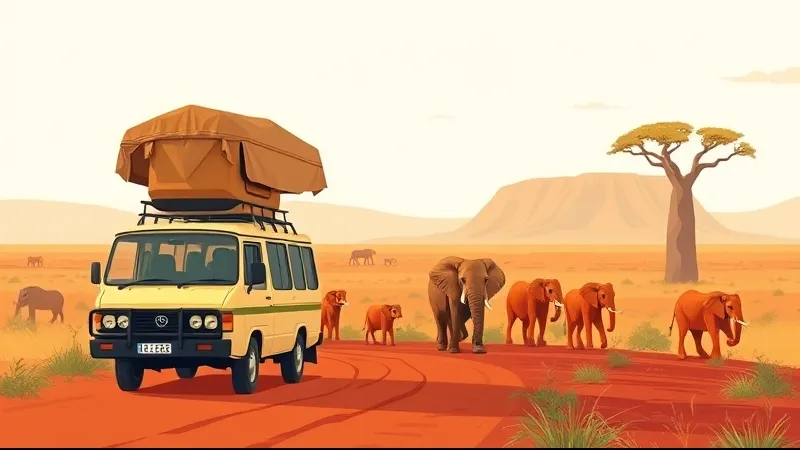
Because of the soil, not the species. Tsavo's ground is iron-rich red laterite. Elephants dust-bathe and wallow in it, and the fine red dust coats their naturally grey skin, giving the population its well-known 'red elephant' appearance.
Dust-bathing is not decoration. It is thermoregulation and parasite control: a layer of dust and mud shields skin from the sun and discourages biting insects. The colour also washes off. After heavy rain the elephants revert towards grey until they wallow again, so the red effect is at its strongest in the drier months.
The geology behind the colour is worth a moment too. Along the park's western edge runs the Yatta Plateau, an ancient lava flow and one of the longest in the world — the kind of landscape feature that explains why Tsavo looks the way it does rather than simply being scenery.
Conservation work in the Tsavo ecosystem is documented by Tsavo Trust and by the Sheldrick Wildlife Trust, which runs elephant reintegration units in the area. Both are useful reading before you go, and both are primary sources rather than marketing.
What does a Tsavo East day safari cost, and what is not included?
There are two separate cost layers, and confusing them is the most common booking surprise.
Layer one — the tour. A Tsavo East day safari from the south coast starts from around €175 per person (verified July 2026). Prices move, so treat that as an anchor and check the live figures in the booking widget on the Tsavo East day safari page rather than trusting any number typed into an article.
Layer two — the KWS park entry fee. This is set by the Kenya Wildlife Service, not by the operator, and is normally paid on the day unless your tour explicitly states otherwise. The tariff figures we verified are USD 25 per non-resident adult and USD 15 per non-resident child (verified July 2026). This tariff is in force but contested in court, a High Court case being open, and rates differ by park and visitor category — so quote it only from the official KWS tariff page before you travel.
Usually extra on top of both layers: drinks, tips for the driver-guide, camera fees where they apply, and single supplements on overnight formats.
On payment: KWS gates are largely cashless, with conservation fees handled through the government eCitizen platform. Do not plan to turn up at the gate with a roll of banknotes and improvise.
When is the best time of year to do this trip?
Seasonality on the Kenyan coast follows a documented pattern, not a forecast anyone can give you months out. Broadly: long rains from roughly late March to May, short rains around November, and drier stretches from January to March and from June to October. For rainfall seasonality, use the Kenya Meteorological Department rather than travel blogs.
Dry months are the easier ones for a day trip. Wildlife concentrates around the Voi River, Aruba Dam and remaining waterholes, vegetation is thinner, and the tracks are in better condition — which means less time lost and more time watching.
Green season is not a write-off. Animals disperse and the bush thickens, so sightings take more patience, but the light and skies are better, dust is down, and it is the season for newborn calves.
One comfort note that catches out beach visitors: daytime temperatures inland at Tsavo regularly run hotter than on the coast, where the sea breeze keeps things moderate. A day that feels pleasant in Diani at 7:00 can be genuinely heavy inside a vehicle at midday in the park.
Is one day enough, or should you book an overnight safari?
Compare the two formats on the metrics that actually matter, not on price alone.
- Game-drive hours: a day trip buys you roughly a half-day of wildlife viewing in exchange for a full day of travel. A two-day trip with a night at a Voi-area lodge roughly doubles that.
- The best light: dawn and dusk are the two most productive windows for animal activity and photography, and a day trip misses both — you arrive after sunrise and must leave before sunset. An overnight puts you inside the park for exactly those hours.
- Fatigue: one long transfer day back-to-back is tiring in a way that is easy to underestimate after a week of doing nothing on a beach.
- Cost per hour in the park: the overnight starts from around €395 per person (verified July 2026) against roughly €175 for the day trip — more money, but noticeably better value per hour of actual safari.
A simple decision rule. Choose the day trip if the safari is a one-off add-on to a beach holiday and you mainly want to say you have seen wild elephants. Choose the overnight safari if wildlife is one of the main reasons you came to Kenya at all.
Who should skip a Tsavo East day trip?
Some people should book something else, and saying so is more useful than selling to everyone.
- Anyone prone to motion sickness. Park tracks are corrugated and dusty, and there is no shortcut back.
- Families with very young children. A pre-dawn start plus a long transfer plus midday heat is a hard combination for toddlers, and for everyone sitting near them.
- Travellers with back or mobility problems. Hours of rough track are physically demanding.
- Anyone with an evening flight the same day. The return arrives after dark and traffic is unpredictable. Do not risk it.
- Photographers who need soft first-and-last-light conditions. The day format structurally excludes both windows.
The most common complaint is not the wildlife — it is the heat inside a vehicle in the middle of the day.
Better alternatives, depending on why you were interested: an overnight safari if it is wildlife you want, a nearer half-day reserve if it is a short day out, or a marine excursion if what you actually want is a full day outdoors without a long inland drive. All are covered in our guides.
What should you pack and how do you prepare for the day?
A practical, evergreen list:
- Neutral-coloured long sleeves and long trousers — sun and dust, not fashion
- A hat with a brim, and high-factor sunscreen
- Plenty of water, more than you think you need
- Binoculars — even a modest pair transforms distant sightings
- A zoom lens, or a clip-on lens for your phone
- A sealable dust bag for camera gear
- Insect repellent and any personal medication
- A light layer for the pre-dawn start, when it is cooler than you expect
Behaviour rules, which are also park rules. Stay in the vehicle unless your guide tells you otherwise. No off-track driving. Never feed wildlife. Keep noise down at sightings — a quiet vehicle sees more. Carry all litter out with you. Current visitor rules and park regulations are published by KWS.
On health preparation, we give no medical advice of our own: check vaccination and malaria prevention guidance for Kenya on the CDC travellers' health page and consult your own doctor or travel clinic before you go.
How does Tsavo East compare with Shimba Hills and Tsavo West?
Travel time is the main differentiator, and each park rewards a different traveller.
- Shimba Hills National Reserve is the closest of the three to Diani — close enough to work as a half-day trip. It is coastal forest and rolling green hills rather than classic plains, and it is the place to look for sable antelope. Good if you want wildlife without a full day in a vehicle; not the place for open big-game landscapes.
- Tsavo West is the most scenic and volcanic of the three, with Mzima Springs and the Chaimu crater. Its bush is denser, so animals are harder to spot. Better for landscape, harder for sightings, and further than Shimba Hills.
- Tsavo East gives the most open, classic big-game country reachable from the south coast, and the best odds of seeing elephant herds in the open — at the cost of the longest transfer of the three.
Official park pages for all three are published by the Kenya Wildlife Service.
If you are weighing Tsavo East against booking a second night, our day trip versus overnight comparison lays the two side by side on game-drive hours and total cost.
Frequently asked questions about Tsavo East day safaris from the coast
What time does the pickup happen?
Before dawn. Operators collect from Diani hotels in the dark so the group can clear Mombasa traffic and reach the gate early, when animals are still active. Exact times vary by hotel and by how many pickups the vehicle has to make, so confirm your slot with the operator the evening before.
Can I do Tsavo East as a day trip from Mombasa or Watamu instead of Diani?
Yes, and the format is the same everywhere on the coast: long transfer, roughly half a day in the park. From Watamu operators generally use Sala Gate on the Malindi side rather than Bachuma. Wherever you start, the travelling hours outnumber the game-driving hours.
Are all of the Big Five present in Tsavo East?
All five occur in the wider Tsavo ecosystem, but presence is not the same as sighting. On a single day you can reasonably hope for elephant and buffalo, sometimes lion. Leopard and black rhino are uncommon encounters that no operator can promise. Treat any guaranteed Big Five claim as a warning sign.
Is a Tsavo East day safari safe?
Road transfers and wildlife proximity are the real risk factors, and both are managed by staying with a licensed operator and following your guide's instructions. For country-level travel advice, read your own government's official advisory rather than a tour page, and check it close to your departure date.
Do I need a visa or vaccinations for Kenya?
Most visitors need a Kenya eTA, costing USD 30, non-refundable, applied for only through the official site etakenya.go.ke. Processing can take up to 72 hours; it is valid 90 days, single entry. For vaccinations and malaria prevention, follow the CDC Kenya page and your doctor — we give no medical advice.
Is there mobile signal inside the park?
Coverage is patchy and cannot be relied on. There is usually some signal near the main gates, lodges and the Voi area, and long stretches with nothing at all. Download offline maps and anything you need before departure, and tell anyone expecting to hear from you that you will be unreachable for most of the day.
Can I drive into Tsavo East in a normal car?
Self-drive is permitted, but a saloon car is a poor choice. Tracks are corrugated, sandy in places and cut up after rain, and there is no roadside assistance. A high-clearance 4x4 is the sensible minimum. For a single day from the coast, a guided tour is simpler, safer and generally cheaper than hiring appropriate transport.
What happens if it rains on the day?
Tours normally run — rain rarely cancels a safari — but the day changes. Tracks soften, some routes may be closed, animals disperse because water is available everywhere, and sightings take more patience. Cancellation and refund terms depend on the booking conditions shown at checkout, so read them before you pay.
How do I pay the park entry fee?
KWS conservation fees are largely cashless and handled through the government eCitizen platform. Some tours collect and settle the fee on your behalf; others expect you to pay at the gate. Ask which applies when you book, and confirm the current non-resident rate on the official KWS tariff page beforehand.
Ready to compare your options?
If you have read this far and still want the day format, check live prices and the exact inclusions on the Tsavo East day safari page. If the long-day trade-off has put you off, the overnight comparison is the better place to start.
Sources
All links checked July 2026. Primary and institutional sources only.
- Kenya Wildlife Service — park information, gates, visitor rules and the official conservation fee tariff
- Wildlife Research and Training Institute — national wildlife census work with KWS, for population data
- Kenya Tourism Board — official destination information
- Kenya Meteorological Department — rainfall seasonality
- Kenya National Highways Authority — the Mombasa–Nairobi corridor and the Dongo Kundu bypass
- IUCN Red List — conservation status of the African savanna elephant
- Sheldrick Wildlife Trust — elephant reintegration in the Tsavo ecosystem
- Tsavo Trust — conservation work in Tsavo
- Kenya eTA — official portal — entry authorisation
- CDC Travelers' Health: Kenya — vaccination and malaria guidance