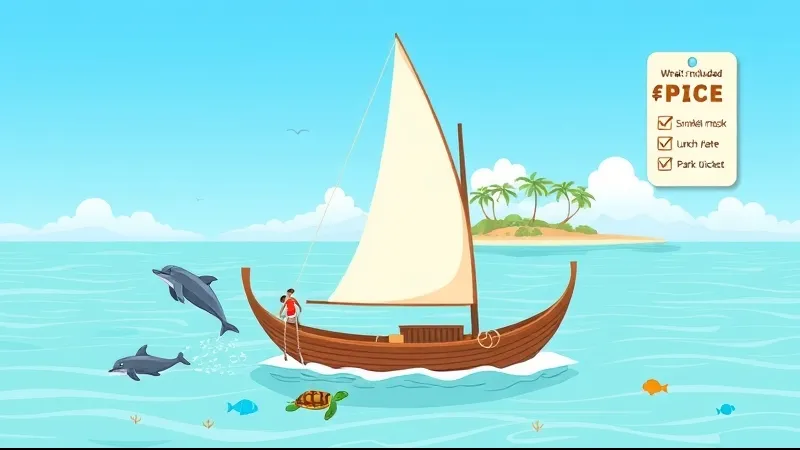
What does the price of a Wasini Island day trip from Diani actually include?
A full-day Wasini Island trip from Diani typically bundles hotel pickup and drop-off, the road transfer from Diani to Shimoni (about 55 km, 1-2 hours by road depending on your pickup point and traffic), the short dhow crossing from Shimoni to Wasini Island (a 15-20 minute boat ride), a guided snorkeling stop and dolphin-watching in the Kisite-Mpunguti Marine Park, and a Swahili seafood lunch served on the island. In other words, you are paying for a full guided day out, transport included, not just a boat ticket.
What is usually not bundled into the headline price is just as important: the Kenya Wildlife Service (KWS) marine-park conservation fee is frequently collected separately, and snorkel-gear upgrades, drinks, and tips for the guide and crew are normally extra. Because operators package these things differently, the exact, current inclusions and live prices are shown in the GetYourGuide widget on the Wasini dhow day trip page, not in this article. Use that inclusion list as your source of truth before you book, and read the two or three lines below it that spell out what you still have to pay on the day.
Is the Kisite-Mpunguti marine park fee included in the tour price?
Often it is not — and this is the single most common "hidden" cost of a Wasini day trip. The Kenya Wildlife Service charges a conservation fee to enter the Kisite-Mpunguti Marine Park, and many operators have you pay it separately at the Shimoni jetty rather than folding it into the price you saw online.
The KWS non-resident rate for Kisite-Mpunguti is USD 25 per adult and USD 15 per child (roughly ages 3-11). Those figures are from the current KWS tariff, which is in force but contested in court (a High Court case is open), and they were verified July 2026 against the official Kenya Wildlife Service site. Park hours are 6:00-18:00 and payment is normally handled through the eCitizen platform. This is one of the few places on this site where you will see a price in US dollars — that is deliberate, because the park fee is a government charge, not a tour price.
Before you book, check the tour page to see whether the operator collects this fee up front or expects it on arrival. If it is paid at the jetty, factor it into your budget and carry some cash so there are no surprises when you board.
How much of the day is transfer, boat and time in the marine park?
Most of the value sits in the length of the day, so it helps to picture the timeline. A typical Wasini trip from Diani starts with an early hotel pickup around 07:15, followed by the drive from Diani to Shimoni — about 55 km that takes 1-2 hours each way, depending on where your hotel is and how the road is moving that morning. Boarding at Shimoni is usually around 9:00.
From there the dhow crossing to Wasini is short, a 15-20 minute boat ride across the channel (Wasini lies about 3 km off the coast). You then spend several hours in and around the Kisite-Mpunguti Marine Park — snorkeling, watching for dolphins, and having lunch on the island — before the dhow returns you to Shimoni and the vehicle drives you back to Diani. Add it all up and this is a long, full-day outing rather than a quick beach excursion. When the price looks higher than a simple boat ride, that is why: you are paying for a guided day with two road transfers, a boat crossing, and hours of protected-area access built in.
Does the price include the dhow ride and snorkeling equipment?
Yes to the dhow, usually yes to the basics on the gear. The traditional dhow sail is normally part of the core price — it is the heart of the trip, not an add-on — and the crossing to Wasini plus the time spent snorkeling from the boat are what you are paying for.
Basic snorkeling equipment is typically provided too: a mask and snorkel, and often fins. What tends to cost extra is anything beyond the basics — wetsuits, underwater cameras, or upgraded gear. Some operators also apply a small dhow supplement inside the park (operator-stated at KES 1,000 / USD 10), so it is worth confirming. Rather than assuming, check the specific inclusions listed in the GetYourGuide widget on the tour page, because operators differ on exactly what is handed to you at the jetty and what you rent on the spot.
Is lunch on Wasini Island included, and what does it cover?
A Swahili seafood lunch is usually built into the price and served at a local restaurant on Wasini Island. The classic spread leans on the coast's fishing and Swahili cooking traditions — commonly crab, grilled or steamed fish, rice, a coconut-based sauce, and tropical fruit to finish. It is one of the more memorable parts of the day and a genuine taste of Wasini village life.
What lunch does not always cover is drinks: alcoholic drinks and some soft drinks are often not included, so budget for those separately. If you are vegetarian, vegan, or have allergies, request suitable options in advance rather than on the day — the island kitchens are small and local, and they can usually accommodate you if they know ahead of time. The inclusion line on the tour page will confirm whether lunch and any drinks are part of your specific package.
Are dolphin and whale sightings part of what you pay for?
You are paying for the guided excursion and access to the marine park — not for a guaranteed animal encounter. That distinction matters. Sightings around Kisite-Mpunguti are frequent, but no operator can promise them, and any honest listing will say so.
The area does have a strong record. Peer-reviewed research carried out between 2011 and 2019 recorded the highest number of dolphin sightings on the Kenyan coast here, identifying around 182 resident Indo-Pacific bottlenose dolphins and around 104 Indian Ocean humpback dolphins — the latter an endangered species. Green and hawksbill turtles and a rich reef community (KWS records around 252 fish species and 56 genera of hard corals in the park) are also part of what makes the water here worth protecting. Humpback whales pass along the coast between July and December, with a peak from August to October. Treat all of this as documented context, not a booking guarantee: sightings are frequent but never guaranteed, and responsible operators keep a respectful distance from marine wildlife rather than chasing it.
What extra costs should you budget beyond the ticket price?
Plan for a handful of predictable add-ons on top of the tour price:
- KWS marine-park fee — USD 25 per adult and USD 15 per child for non-residents, from the current KWS tariff that is in force but contested in court (verified July 2026; see the official KWS site).
- Drinks and bottled water — often not included with lunch.
- Tips for your guide and the dhow crew, if you are happy with the day.
- Optional extras such as a visit to the Shimoni Slave Caves near the jetty.
- Personal items — reef-safe sunscreen, a hat, and motion-sickness tablets if the crossing tends to bother you.
Carry some cash in Kenyan shillings for the park fee, tips, and small purchases on Wasini, since card payment is not reliable at the jetty or in the village. A little cash on hand removes most of the friction from an otherwise smooth day.
How do independent day trips compare with hotel-desk bookings?
The trade-off comes down to convenience versus transparency. Booking through your hotel's tour desk is easy — someone arranges everything without you lifting a finger — but that convenience often carries a markup, and the inclusions can be described loosely in conversation rather than written down. A pre-booked online tour, by contrast, lists its inclusions and cancellation terms in writing before you pay, which makes it far easier to see whether the park fee, gear, and lunch are actually covered.
As an independent comparison guide, our advice is to judge on the full inclusion list and the cancellation policy, not the headline price alone. Two trips at similar prices can differ sharply once you account for who collects the KWS fee, what gear is provided, and how flexible the rebooking terms are. If you want to weigh the same trip against the Mombasa-based version or a private charter, our Wasini from Diani vs Mombasa comparison lays out the differences side by side so you can match the day to your budget and starting point.
What is the best time of year for a Wasini day trip?
The calmer, clearer months are generally the best window for snorkeling. Under the kaskazi monsoon (northeast, drier), running roughly November to March or April, seas tend to be calmer and underwater visibility is at its best — the peak snorkeling stretch falls around October to March, with January and February often the clearest. Sea temperatures sit in a comfortable range year-round.
The kusi monsoon (southeast) brings rougher water from around April or May into October, and the long rains from April to June can mean choppier crossings and a higher chance of cancellations, with May and June the least favourable. These are documented seasonal patterns, not a forecast — we never declare the current sea state or visibility here. Conditions are decided on the day, and a responsible operator may reschedule or adjust the route for safety, which is exactly what you want them to do.
Frequently asked questions
Is the Kisite-Mpunguti marine park fee included in the price?
Often not — it is the most common cost paid separately at the jetty. The KWS non-resident rate is USD 25 per adult and USD 15 per child, from the current tariff that is in force but contested in court (verified July 2026 on kws.go.ke). Check the tour page to see whether your operator collects it up front or on arrival.
Are dolphin and whale sightings guaranteed?
No. Kisite-Mpunguti has the highest recorded dolphin sightings on the Kenyan coast, and humpback whales pass between July and December, but no operator can promise a sighting. You are paying for the guided excursion and marine-park access, not a specific animal encounter.
Is hotel pickup from Diani included?
Yes, most full-day Wasini packages from Diani include hotel pickup and drop-off, typically with an early start around 07:15. Always confirm your specific hotel is within the pickup zone on the tour page before booking.
How long is the drive from Diani to Shimoni?
Diani to Shimoni is about 55 km and usually takes 1-2 hours each way, depending on your pickup point and traffic. Boarding at Shimoni is generally around 9:00, so this is very much a full-day outing rather than a short trip.
Do I need to bring cash, and is the trip suitable for children and non-swimmers?
Yes, carry cash in Kenyan shillings for the park fee, tips, and small purchases, since cards are unreliable at the jetty. The trip suits families and non-swimmers — children have a reduced KWS rate, and non-swimmers can enjoy the dhow sail and lunch — but confirm life jackets and any age notes in the inclusion list, and request vegetarian or allergy-safe meals in advance.
Ready to compare the exact inclusions?
Read the written inclusion list, park-fee arrangement, and cancellation terms in the widget on the Wasini dhow day trip from Diani page (from ~€80, verified July 2026) before you book — or see how it stacks up against a private dhow cruise if you would rather have the boat to yourselves.
Sources
- Kenya Wildlife Service (KWS) — official park information and Conservation Fee schedule for Kisite-Mpunguti (fees in force but contested in court; verified July 2026).
- Magical Kenya — Kenya Tourism Board — regional travel context for the south coast and Kwale county.
- CDC — Kenya Traveler Health — official health guidance for travel to Kenya (always consult official sources for vaccinations and malaria).
- Kenya eTA — official portal — the only official site for Kenya's electronic travel authorisation.
- Peer-reviewed marine research on Kisite-Mpunguti dolphin populations (2011-2019) for the recorded bottlenose and Indian Ocean humpback dolphin figures.
- Live tour prices, inclusion lists, and ratings come from the GetYourGuide widgets on our excursion pages, not from this article.