What does the price of a Wasini Island day trip from Diani normally include?
A standard Wasini and Kisite day trip sold from Diani usually bundles six things: road transfer from the Diani, Galu and Ukunda area down to Shimoni, the dhow or boat crossing to Wasini Island, a snorkelling stop inside the Kisite-Mpunguti Marine Park, mask and snorkel, a Swahili seafood lunch on the island, and a guide for the day. The Kenya Wildlife Service marine park fee is the one line that moves: some listings include it, many collect it separately at Shimoni.
This guide explains what each line item means, not what it costs. Live prices, availability, inclusions and ratings are shown in the GetYourGuide widget on each tour page, because operators change them without notice — that widget, not this article, is the source of truth for numbers. For reference only, a Wasini dhow day trip from Diani starts from around €80 (verified July 2026).
One caveat applies to the whole day, and it belongs at the top rather than in the small print: dolphin, whale, turtle and dugong sightings are frequent in these waters but never guaranteed. No operator can promise them, and they are never part of what you are paying for.
Is the Kisite-Mpunguti marine park fee included in the tour price?
Sometimes. The Kisite-Mpunguti Marine National Park and the adjoining marine reserve — established in 1978 and covering roughly 39 km² in total — are managed by the Kenya Wildlife Service, which charges a per-person conservation fee that is legally separate from the boat trip. Some listings roll it into the headline price. Many collect it in cash at the Shimoni jetty before boarding.
The published tariff for the park is USD 25 for a non-resident adult and USD 15 for a non-resident child; USD 15 and USD 10 for African non-EAC visitors; KES 500 and KES 250 for East African Community citizens; and KES 675 and KES 350 for Kenya residents. These are the 2025 tariff figures, in force but contested in court — a High Court case is open — and they were verified July 2026. Re-check them on kws.go.ke before you travel, because KWS revises tariffs periodically and the court case may change the picture again.
Two practical notes. Park entry hours run 6:00 to 18:00, and KWS payments are handled through the eCitizen platform. Operators also commonly state a dhow supplement inside the park of KES 1,000, or USD 10 — that figure is operator-stated rather than a published KWS line. When you read a listing, look for the exact words park fees included or park fees excluded in the inclusions list, and if the wording is vague, treat the fee as excluded and budget for it.
How does the transfer from Diani to Shimoni work, and is it part of the price?
On almost every shared departure the road transfer is included. Pickup is from hotels in the Diani, Galu and Tiwi area, typically around 07:15, with boarding at Shimoni around 9:00. The drive south is about 55 km and realistically takes one to two hours depending on traffic, road works and police checks.
Because Diani already sits south of the Likoni channel, no ferry crossing is involved — that is the structural advantage of leaving from Diani rather than Mombasa, where the same trip means an earlier start and the ferry. If you are weighing the two starting points, the Diani versus Mombasa comparison sets them side by side; a Wasini trip from Mombasa starts from around €118 (verified July 2026).
Two things about transfers routinely surprise people. Pickup from outside the standard collection zone often carries a supplement, so confirm your hotel is inside it. And a shared trip collects guests from several hotels in sequence: that is a hidden time cost rather than a money cost, and it is the main reason a Wasini day runs long in both directions. Plan on being out for the whole day and back at your hotel in the evening rather than mid-afternoon.
What type of boat is included, and why does that change the price?
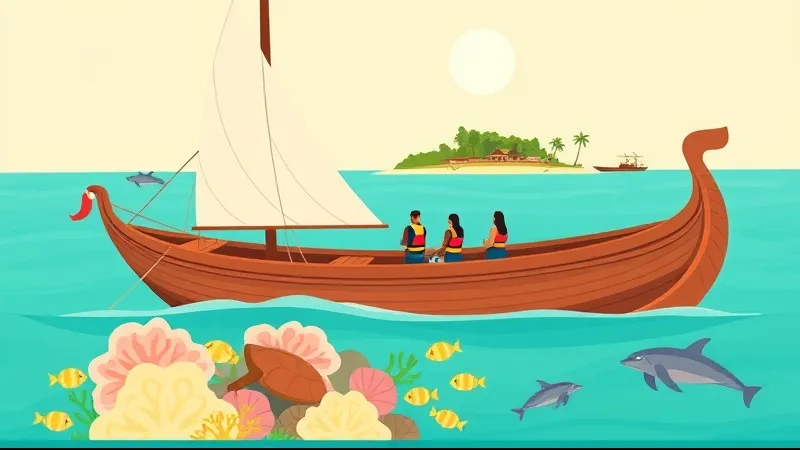
Three formats are sold out of Shimoni, and the boat is the single biggest driver of what a day feels like. The traditional wooden dhow with a lateen sail is slow and atmospheric, carries a larger group, and spends more of the day travelling. The motorised dhow is the workhorse of the mass-market trips: same deck, more predictable timing. The smaller speedboat used by premium and private trips reaches the reef faster, which converts directly into more time in the water.
The crossing from Shimoni to Wasini Island itself is short — 15 to 20 minutes, with the island lying about 3 km off the coast — but the run out to the snorkelling sites inside the marine park adds to that, and how long it adds depends entirely on the hull under you.
Many listings describe the vessel only as a traditional boat, which tells you almost nothing about shade, whether there is a toilet on board, group size or stability in swell. Check the GetYourGuide description on the tour page for the stated boat type, the maximum group size and whether life jackets are provided, rather than assuming. If crowding is your main concern, the private dhow cruise option is sold as a separate product, with its live price shown in the GetYourGuide widget on that page.
Is snorkelling equipment included, and what usually is not?
Mask, snorkel and life jacket are almost always included. Fins, wetsuits or rash vests, underwater cameras and prescription masks frequently are not, and on shared trips they often are not available at all.
Sea temperature on this coast sits between 23 and 27°C year-round, so a wetsuit is a comfort choice rather than a necessity for most visitors — useful if you chill quickly or plan long time in the water, unnecessary for a single snorkelling stop. The practical alternative most people actually need is reef-safe sunscreen and a long-sleeved rash top, which solves sunburn on your back while you float face-down.
If you have a personal fit preference, bring your own mask. Rental masks are shared, sized generically, and a leaking mask ruins the one part of the day you came for. Kisite-Mpunguti has roughly 252 recorded fish species and around 56 genera of hard corals, and it holds a gold Blue Park Award granted in 2021 — that reef condition exists because it is protected. Do not touch, stand on or kick coral; guidance from the Kenya Wildlife Service and reef research from the Kenya Marine and Fisheries Research Institute both make the same point.
What is included in the Swahili seafood lunch on Wasini Island?
Lunch on Wasini is included in essentially every standard trip, and it is served in the village restaurants and community kitchens rather than at a hotel buffet. The set menu is typically grilled fish, Swahili-spiced crab, rice cooked with coconut, vegetables, chapati and seasonal fruit. Soft drinks and alcohol are normally charged separately.
Lobster and large prawns are usually an upgrade, not part of the base meal. If a listing advertises lobster, check whether it says included or available at extra cost.
Vegetarian, vegan, halal and allergy requirements must be declared at the time of booking, not on the boat. The kitchens cook one set menu for the whole group, and there is no à la carte fallback on a small island. A share of the lunch revenue supports community enterprises on Wasini, which is a real part of the value of the day rather than a marketing line — the Kenya Tourism Board documents this kind of community tourism along the south coast.
Which extras are almost never included in a Wasini day trip?
The recurring day-of spend list is short and predictable:
- Drinks, including alcohol, with lunch
- Tips for the crew and guide
- The community fee for the Wasini coral garden and mangrove boardwalk
- Lobster or prawn upgrades at lunch
- Wetsuit or fin hire, where available at all
- Souvenirs from the women's group stalls
- Any personal cost if you leave the group and arrange your own transport back
The coral garden boardwalk is worth its own line: a walkway of roughly 500 m over fossil coral and mangroves, run by the Wasini women's community group, with an entry fee of around KES 200 that is reinvested in the village clinic and school. At high tide the gardens are partly covered, so what you see depends on when your boat arrives.
All of these are effectively cash-only, in Kenyan shillings, in the village. Card payment and reliable mobile signal cannot be assumed on the island. Carry small denominations. This article deliberately gives no figures for tips, drinks or upgrades: they are set locally, they change, and a number here would be stale before you read it.
How does a shared group trip differ from a private charter in what you get?
Compare the two on inclusions, not on headline figures.
A shared departure runs to a fixed schedule with a larger group, normally one snorkelling stop, a set lunch and a fixed return time driven by the slowest hotel drop-off. A private charter buys flexibility: a departure time you choose, often a second snorkelling site, longer at each stop, a menu you agree in advance, and a boat you are not sharing with strangers.
One thing does not change. Private trips normally still exclude the KWS park fee per person, so that cost scales with the size of your group rather than being absorbed by the charter price. A family of five pays five fees either way.
If you are deciding between the two, read the inclusion lists in the GetYourGuide widgets side by side on the shared Wasini dhow day trip page and in the private versus group comparison. Comparing what is in the box is more useful than comparing the number on the front of it.
Does the season change what you receive for the same price?
The documented seasonality on this coast is clear, even though conditions on any given day are decided on the day, by the crew, not by an article.
The kaskazi monsoon, the dry north-easterly, runs roughly November to March or April and generally brings calmer seas and the best underwater visibility. The kusi monsoon, the south-easterly, runs roughly April or May through October with rougher water, and the long rains fall between April and June, when some operators reduce or pause departures. On the documented record, the best snorkelling window is October to March, peaking in January and February, with May and June the least favourable months.
Tide matters as much as season. According to local operators, snorkelling is best in roughly the two hours around low tide — which is why departure times shift and why two trips in the same week can feel different.
Humpback whales pass along this coast between July and December, peaking August to October. Turtles and dolphins are recorded year-round. None of it is guaranteed, and no refund attaches to a quiet day. Monsoon periods are documented by the Kenya Meteorological Department.
Are dolphin and whale sightings part of what you pay for?
No. Categorically not.
The waters around Shimoni and Kisite-Mpunguti have the highest number of recorded dolphin sightings on the Kenyan coast, based on peer-reviewed research covering 2011 to 2019. Researchers identified roughly 182 resident Indo-Pacific bottlenose dolphins and around 104 Indian Ocean humpback dolphins, the latter an endangered species. Humpback whales pass seasonally, July to December with an August–October peak. Encounters are common and crews do look for them as part of the cruise.
But those are research findings about a population, not a promise about your morning. No operator sells a sighting, none can guarantee one, and no refund is normally offered if the day passes without one. Treat any listing that implies otherwise with suspicion.
On responsible viewing: keep distance, never chase or encircle animals, and let the crew set the approach — guidance from the Kenya Wildlife Service and marine mammal researchers is consistent on this. Dugongs are critically endangered in Kenyan waters and effectively absent from a normal day trip; their status is documented on the IUCN Red List. Do not expect to see one.
How do you read a Wasini tour listing before booking?
Run the same seven checks on every listing:
- Park fee — in or out? If the wording is ambiguous, assume out.
- Pickup zone and time — is your hotel inside the standard zone, and is there a supplement if not?
- Boat type and maximum group size — traditional boat is not an answer.
- Number of snorkelling stops — one or two changes the whole day.
- Lunch — set menu included, upgrades extra, dietary requirements notified at booking.
- Cancellation window — and what happens if the trip is called off for weather.
- Licensing — Kenyan operators can be cross-checked against the Kenya Association of Tour Operators and the Tourism Regulatory Authority.
Mass-market Wasini trips do draw genuine complaints — long transfers, crowded decks, rushed snorkelling, a lunch stop that feels processed. That is precisely why comparing inclusion lists is worth the ten minutes. Live prices, availability, inclusions and ratings appear in the GetYourGuide widget on each tour page and should be your single source of truth.
What should you budget for beyond the tour price?
Six categories, no invented amounts: the KWS park fee if it is excluded, drinks at lunch, tips for crew and guide, the boardwalk community fee, any lunch or equipment upgrade, and souvenirs.
One thing you should not be asked for is tax. Kenya applies a standard VAT rate to many tourism services, and prices quoted on booking platforms are normally inclusive of it, so a separate tax line should not appear at the jetty. The current rate is published by the Kenya Revenue Authority.
If Kenya is a new destination for you, note separately that most visitors need an electronic travel authorisation before arrival: USD 30, non-refundable, single entry, valid 90 days, with processing of up to 72 hours, and only through the official site etakenya.go.ke. For vaccinations and malaria precautions, use the CDC Kenya travel page and official health sources rather than travel blogs.
Packing for a full day out: water, hat, reef-safe sunscreen, motion-sickness tablets if you are prone, a dry bag, a towel, and cash in Kenyan shillings in small denominations.
Frequently asked questions
Is the Kisite-Mpunguti park fee included in a Wasini day trip?
Sometimes. Many listings exclude it and collect it at Shimoni. The published tariff is USD 25 per non-resident adult and USD 15 per child — 2025 figures, in force but contested in court, verified July 2026. Re-check on kws.go.ke before travelling, and read the inclusions list in the GetYourGuide widget on the tour page.
Is hotel pickup from Diani included, and what time does it start?
On shared departures, yes, for hotels inside the standard Diani, Galu and Tiwi zone. Pickup is typically around 07:15, with boarding at Shimoni around 9:00 after a drive of about 55 km taking one to two hours. Pickup outside the zone often carries a supplement — confirm your hotel before booking.
Is lunch included, and can it be vegetarian or halal?
Lunch on Wasini is included on standard trips: grilled fish, Swahili-spiced crab, coconut rice, vegetables, chapati and fruit. Drinks and lobster upgrades are usually extra. Vegetarian, vegan, halal and allergy needs must be declared at booking, because the kitchens cook one set menu for the whole group.
Are fins, wetsuits and the boardwalk fee included?
Mask, snorkel and life jacket are almost always included; fins and wetsuits usually are not, and sea temperature of 23 to 27°C makes a wetsuit optional for most people. The coral garden boardwalk is separate: around KES 200, cash, paid to the Wasini women's group, reinvested in the village clinic and school.
Are dolphin or whale sightings guaranteed, and what happens in bad weather?
No sighting is ever guaranteed, and no refund attaches to a quiet day — crews search, they do not promise. Trips may be cancelled or rescheduled for sea conditions; the cancellation terms are stated in the GetYourGuide listing, which is also where live prices, availability and inclusions appear. Carry shillings in cash for the island.
Sources
- Kenya Wildlife Service — conservation-fee tariff, Kisite-Mpunguti Marine National Park and Reserve information, park hours, eCitizen payment. Fee figures are the 2025 tariff, in force but contested in court; verified July 2026.
- Kenya Tourism Board / Magical Kenya — destination and community-tourism information for the south coast.
- Kenya Marine and Fisheries Research Institute — reef and marine-park ecology on the Kenyan coast.
- UNEP Nairobi Convention — Western Indian Ocean marine protected areas.
- IUCN Red List — conservation status of dugong, green and hawksbill turtles, and humpback whales.
- Kenya Meteorological Department — kaskazi and kusi monsoon periods.
- Kenya Revenue Authority — current standard VAT rate applied to tourism services.
- Kenya Association of Tour Operators and Tourism Regulatory Authority — operator membership and licensing checks.
- eTA Kenya — official electronic travel authorisation portal.
- CDC — Kenya travel health — vaccination and malaria guidance.
- Dolphin population figures are from peer-reviewed research on the Kisite-Mpunguti area covering 2011–2019.
Figures last verified July 2026. Park fees and tariffs are set by Kenya Wildlife Service, are currently the subject of an open High Court case, and must be re-checked on kws.go.ke before you travel. Tour prices, inclusions, availability and ratings are live in the GetYourGuide widget on each excursion page and are not reproduced here.